
TIN CADDY
Crafted by one of the few remaining tea caddy craftsmen, TIN CADDY protects its contents with superior airtightness while serving as a “new tea caddy” that blends into modern interiors like an objet d'art.
Designer Shigeichiro Takeuchi shares the allure and the STORIES behind TIN CADDY.

A tea caddy that “adorns” the kitchen and interior.
TIN CADDY is crafted by one of the few remaining craftsmen, inheriting traditional techniques cultivated over many years.
The tea caddy—an item familiar since ancient times—has been reimagined with a design that evokes a contemporary atmosphere.
It is a “new tea caddy” that melts into modern spaces like an objet d’art.
PRODUCT STORY Vol.16
—— What led to the development of TIN CADDY (TIN CANISTER)?
TIN CADDY was first released in 2017 under the name “TIN CANISTER.” Since MOHEIM launched in 2014, the addition of TIN CANISTER to the lineup occurred during the brand’s early stages.
Shortly after the brand’s launch, there was an opportunity to visit a workshop that preserves traditional tea caddy manufacturing methods. The handcrafted tea caddies and tin canisters seen there possessed a purity and beauty as functional “tools,” with all unnecessary elements stripped away. Deeply impressed by the minimal presence, craftsmanship, and techniques, a desire emerged to include these tea caddies in the MOHEIM collection.
—— What is the most distinctive feature of TIN CADDY?
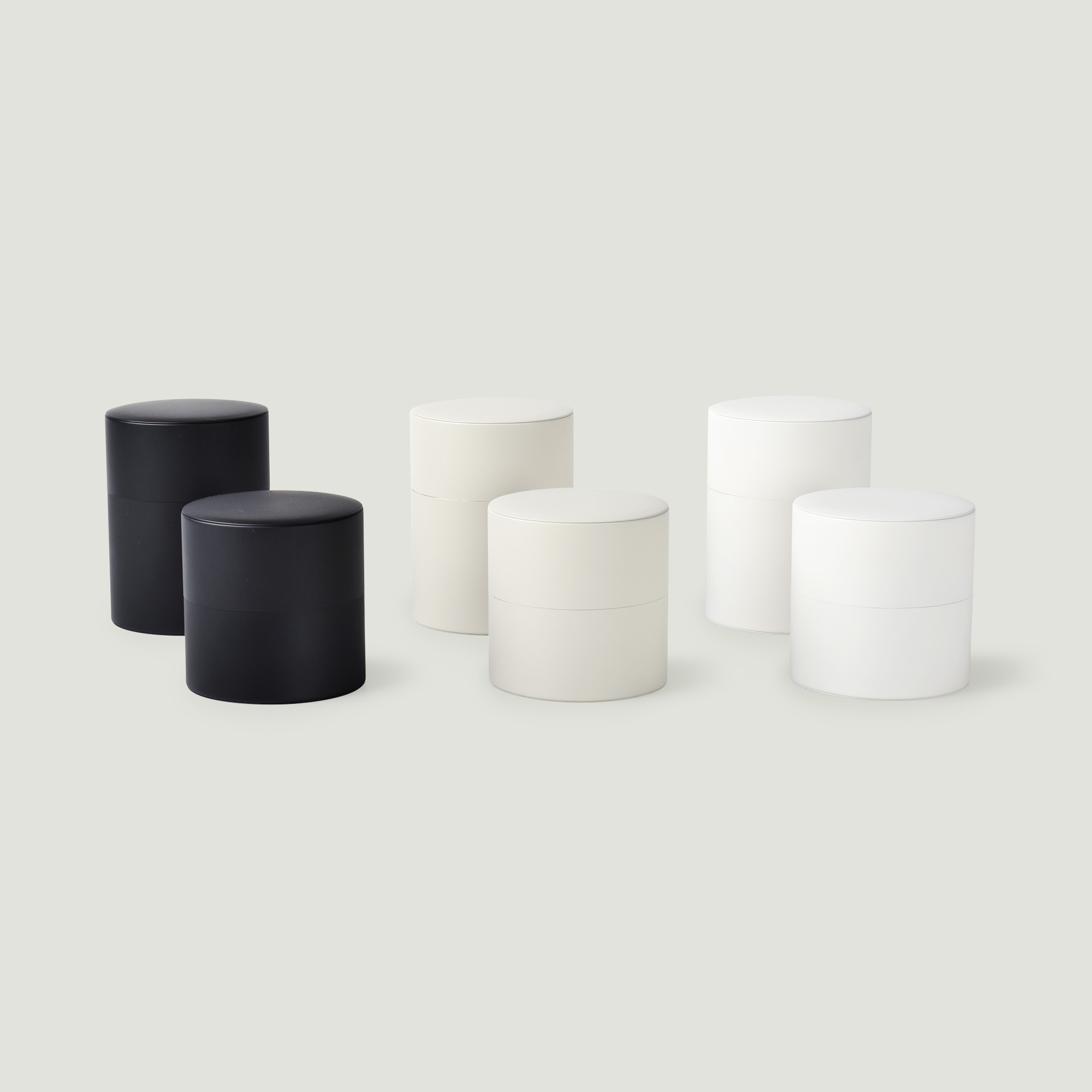
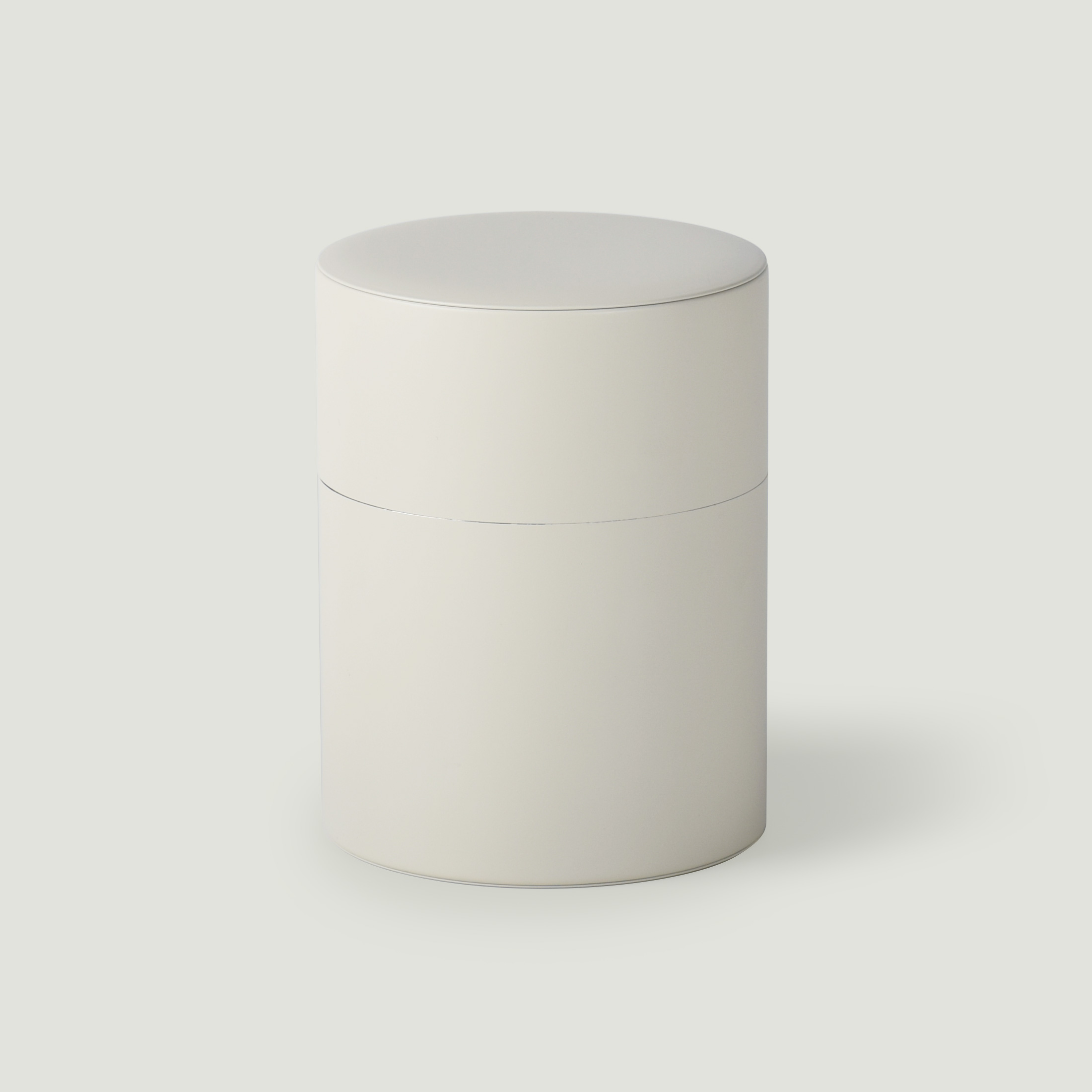
Is there anything noticeable about this TIN CADDY? There is no unevenness between the lid and the body. It is this very appearance that sparked such profound admiration at first sight.
On the other hand, most machine-made tea caddies have a bulge around the rim of the lid. This construction is what is most commonly seen in the majority of tea caddies found today.
The refined presence, where the lid and body are seamless and perfectly integrated without any unevenness, is something that can only be created by hand. This beauty is achieved through rare techniques possessed by only a handful of craftsmen remaining in Japan today.
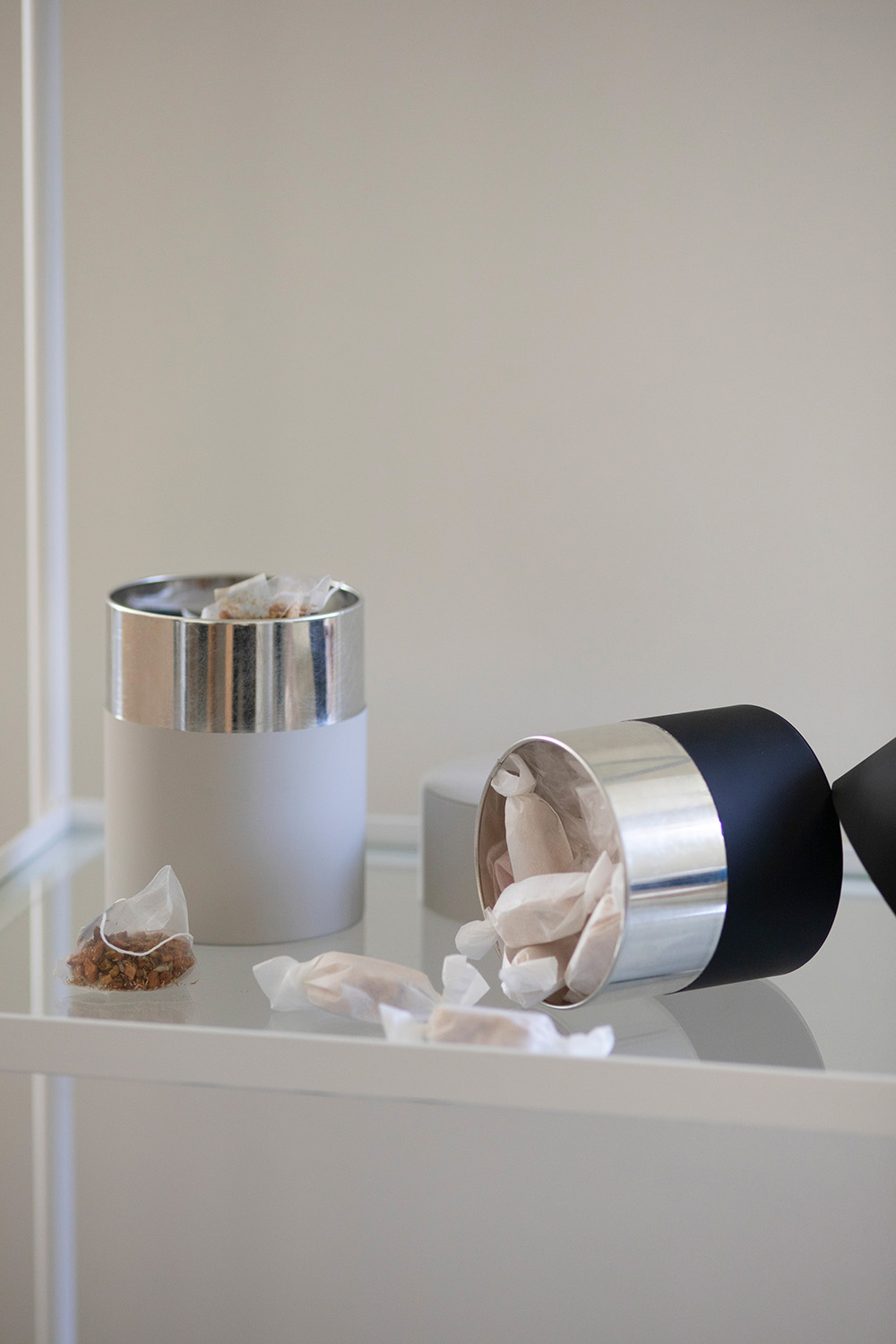
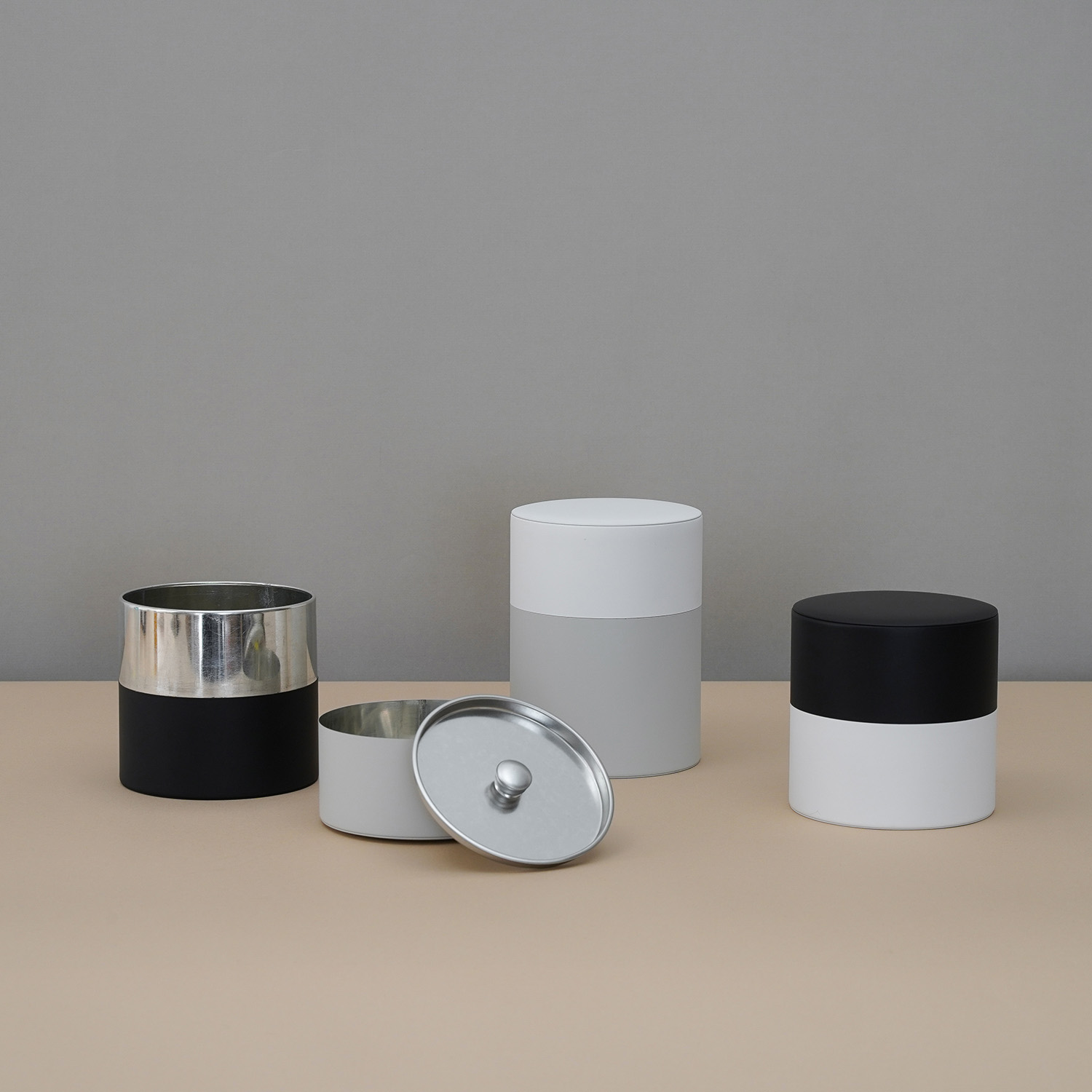
To accentuate its minimalism, the color palette consists of three standard monotone shades: white, gray, and black. The painted finish is also matte, with a specific focus on achieving a unique texture.
—— How is it manufactured?
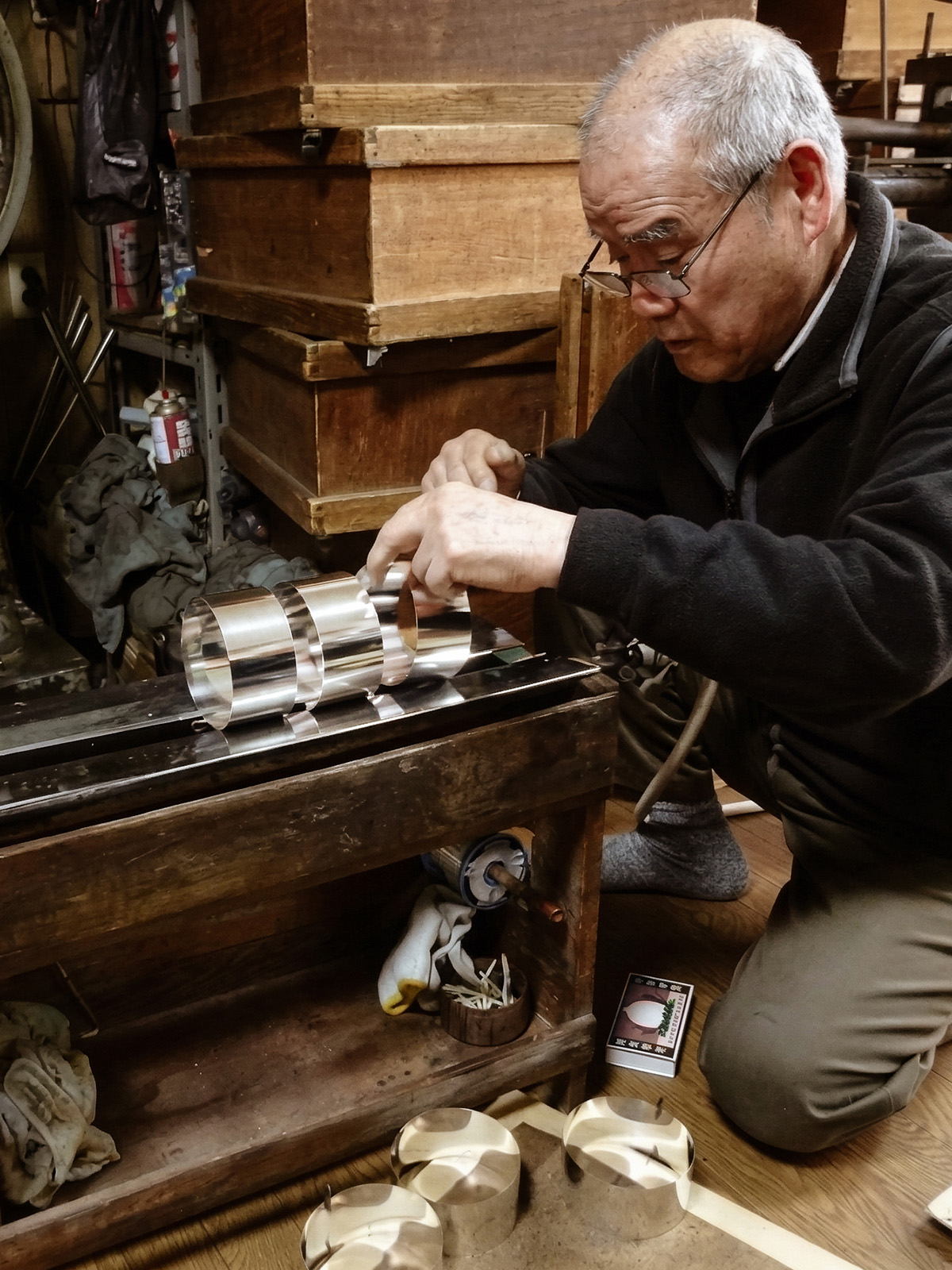
At a historic workshop with over 130 years of heritage, each item is handcrafted by craftsmen who have inherited traditional manufacturing methods. Today, it is said that only a handful of people in Japan still possess these skills.
From the cutting of materials in increments of 0.1mm to bending, soldering, and wiping—every step is meticulously finished with techniques backed by years of experience.
Compared to machine-made cans, this process requires a tremendous amount of time and effort; however, it results not only in a beautiful form but also in exceptional airtightness.
—— So, it also offers excellent airtightness.
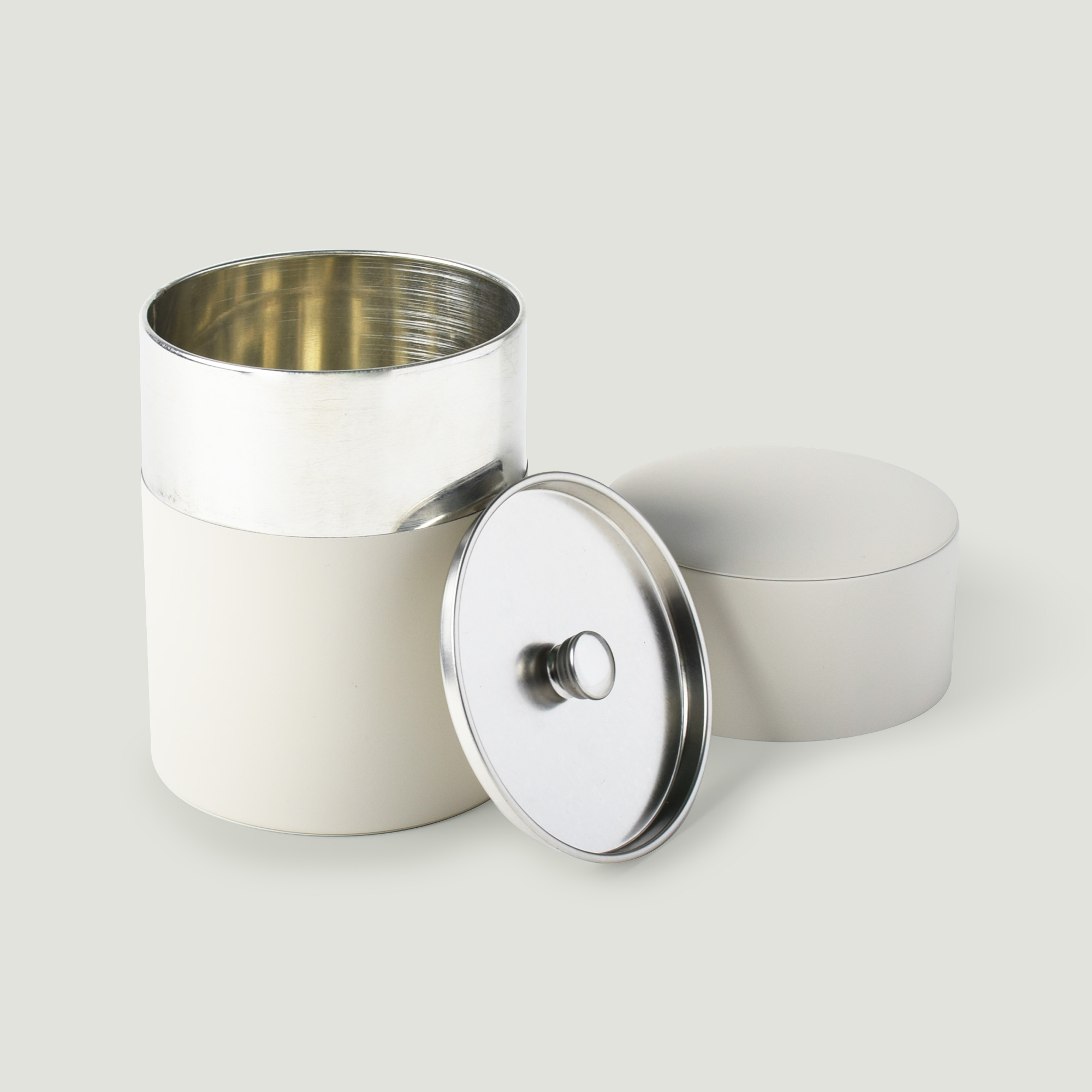
With its double-layered structure consisting of an outer and inner lid, TIN CADDY blocks out both moisture and light, preventing the contents from deteriorating and ensuring they last longer.
While plastic inner lids are common in mass-produced tea caddies, TIN CADDY maintains a commitment to tinplate even for the inner lid. In fact, craftsmen capable of crafting these tinplate inner lids are so rare that only a few workshops remain in all of Japan.
While plastic tends to loosen or tighten with changes in temperature and humidity, tinplate experiences very little expansion or contraction. This minimal material shift ensures that the shape remains stable, allowing for continued use with the same level of precision for many years.
Due to the exceptional airtightness of TIN CADDY, lifting the outer lid straight up may sometimes cause the inner lid to cling to it and come off together. While some might wonder if this is a defect, it is actually a direct result of the high degree of airtightness. By turning the lid slightly and opening it at an angle, the outer lid can be removed smoothly without disturbing the inner lid.
—— With such high airtightness, it seems perfect for storing a variety of items beyond just tea leaves.
The material of TIN CADDY is tinplate. It may be helpful to think of it as the familiar material used in food-grade tin cans. In other words, it is the ideal container for storing food items.
It is perfect for storing not only tea leaves and coffee beans, but also snacks like granola, cereal, and nuts. In keeping with traditional uses, it is also ideal for dried foods.
Beyond food, it is also recommended as a place to keep daily essentials like cotton pads or cherished accessories.
Two sizes are available: S (small) and M (medium).
The S size holds approximately 230g of sencha tea or 170g of coffee beans (about 200g if ground). With its 1:1 ratio—the diameter and height being the same—the form is charming and rounded, making it easy to grow fond of. It also offers ample space for storing tea bags.
The M size is a slightly more compact resize of the traditional tea caddy, creating a modern atmosphere. It is large enough to hold approximately 320g of sencha tea or 250g of coffee beans (about 280g if ground), making it ideal not only for dried foods but also for storing items like short pasta.
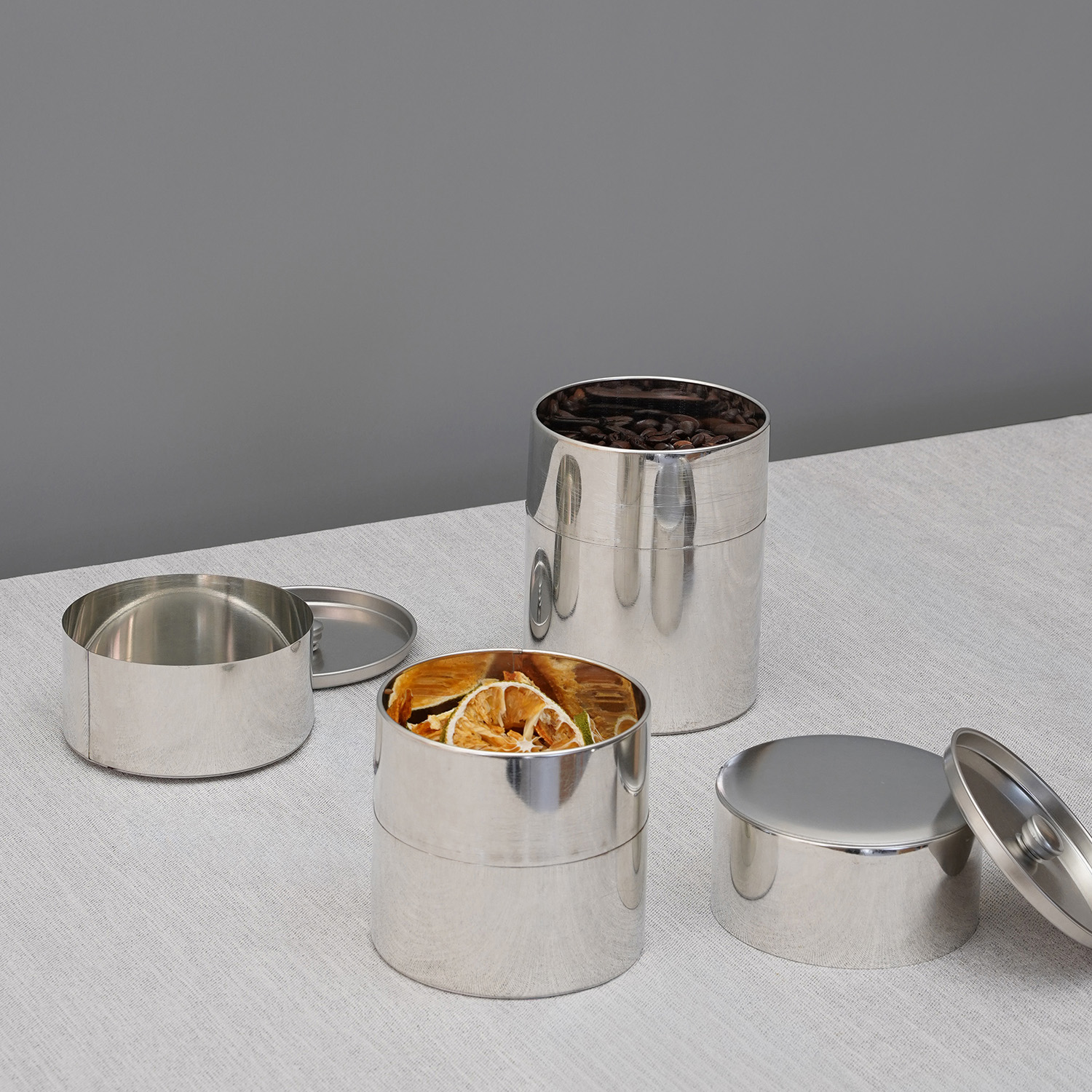
—— In April 2026, “plain” and “two-tone” versions also made their debut as MOHEIM online store exclusives.
“plain” is a model designed to showcase the raw texture of the material and its rustic presence, without any coating or anti-rust processing. The visible soldering marks serve as a direct testament to the artisan’s traditional handiwork and the very breath of their craft. This model invites the user to find beauty in the small spots unique to tinplate and the scratches or patina that develop over time—the true joy of “nurturing” a personal tool into one’s own.
On the other hand, “two-tone” features a combination of different colors for the lid and body. This model offers a more modern impression with a playful touch. As it adds a charming accent to any setting, it is lovely on its own, yet the hope is that people will enjoy arranging several together to decorate their interiors.
—— Lastly, could you tell us about the vision and passion infused into TIN CADDY?
The hope is for that “aesthetic presence,” which was felt so profoundly upon first encountering the handcrafted tea caddies, to be brought into people’s living spaces. While protecting one’s favorite items with superior airtightness, TIN CADDY serves as an elegant accent that beautifully adorns any setting.
Tea and coffee enjoyed daily are often kept within arm’s reach in the kitchen. When placed in its usual spot, TIN CADDY emanates a presence akin to a contemporary objet d’art. The hope is that it will be embraced not merely as a storage container, but as a key interior piece that elevates the mood with every use.
Item information


